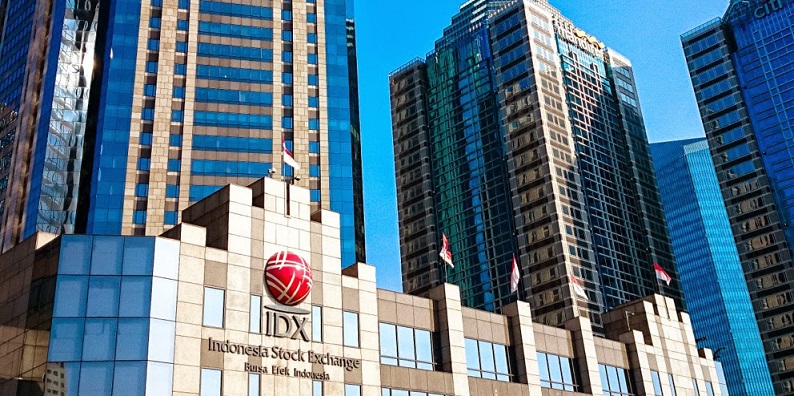
JAKARTAIndonesia's benchmark Jakarta Composite Index (IHSG) rose 0.49% to close at 5,241.58 on Tuesday (24/11/2026), rebounding from an intraday dip to 5,198.64 triggered by MSCI's denial of reports that it would halt a downgrade review of Indonesian equities. Meanwhile, the rupiah weakened 0.15% to Rp18,203 per US dollar in spot trading as the dollar index held near highs last seen in March 2025.
Why did MSCI deny reports on Indonesia's market status?
Market turnover reached Rp11.74 trillion across 30.44 billion shares and 1.43 million transactions, with 168 stocks advancing, 179 declining, and 112 unchanged. Financial stocks led sectoral gains with a 0.89% rise alongside consumer non-cyclicals (+0.68%), lifting the LQ45 index 1.10% to 546.13 and Sri-Kehati 1.71%.
Earlier volatility stemmed from MSCI's formal rebuttal of a Bloomberg report claiming CEO Henry Fernandez had signaled openness to alternatives during a call with President Prabowo Subianto. Previously, reports of the Prabowo–Fernandez call had buoyed optimism over avoiding a downgrade, yet MSCI stressed its proposal to reclassify Indonesia from Emerging Market to Standalone Market remains active.
What are Danantara's 2027 profit and macro targets?
MSCI confirmed its market consultation remains open until April 30, with a final verdict due no later than June 30. Speaking at the Presidential Palace complex, sovereign fund BPI Danantara CEO Rosan Perkasa Roeslani declined to confirm the reported phone call and said the Financial Services Authority (OJK) is advancing reforms on MSCI's two core demands: disclosure of concentrated share ownership and stronger regulatory enforcement.
Separately before Parliament's Commission XI, Danantara Chief Investment Officer Pandu Sjahrir and Rosan projected PT Danantara Investment Management (DIM) net profit would climb to Rp5–6 trillion next year, up from this year's Rp800 billion estimate and Rp3.4 trillion budget plan. Revenue of Rp21–22 trillion from private investments will be supported by Rp50 trillion in Danantara capital injections and roughly Rp122 trillion in bond issuances and credit facilities.

How the weaker rupiah affects fuel costs and subsidies
Notably, Danantara's 2027 budget assumes 5.2%–6% GDP growth, 2.5%–3.2% inflation, crude oil at US$75–90 per barrel, and an exchange rate of Rp17,200–17,400 per dollar—markedly stronger than Tuesday's Rp18,203 spot rate. Management has already budgeted for an estimated Rp2.5 trillion in foreign-exchange losses and Rp3 trillion in taxes.
For Indonesian households and businesses, a rupiah hovering near Rp18,200 heightens imported energy costs and underscores the stakes of retaining Emerging Market status for passive global fund inflows. While pump prices at Pertamina, Shell, BP-AKR, and Vivo have held steady since November 1—with subsidized Pertalite at Rp10,000, Solar at Rp6,800, and Pertamax at Rp15,950 per liter—currency pressure makes OJK's transparency reforms pivotal for macro stability.