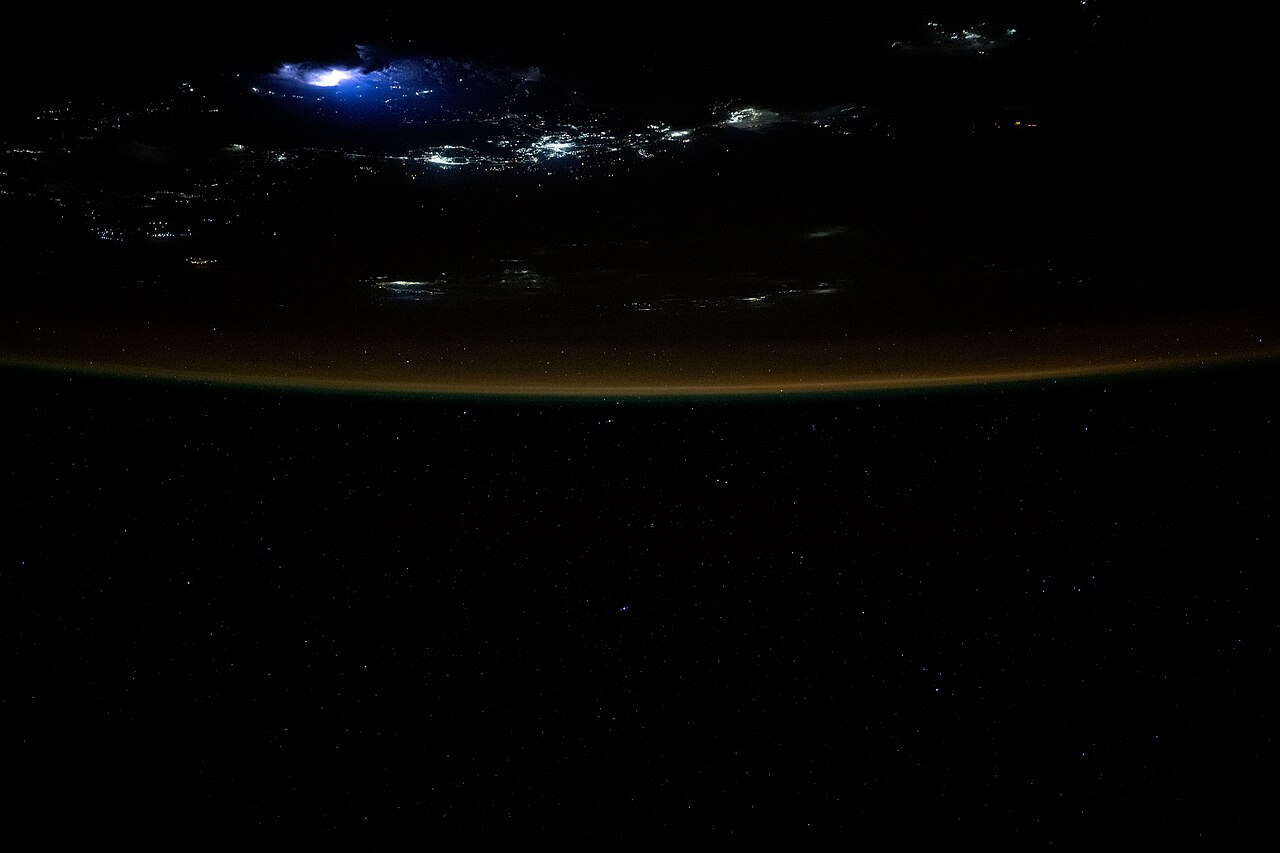
KALIMANTANNASA's Earth Observatory has published a striking astronaut photograph, cataloged as ISS075-E-250951, showing brilliant lightning illuminating towering thunderstorm domes over the South China Sea near Kalimantan on the island of Borneo. An Expedition 75 crew member aboard the International Space Station captured the scene with a Nikon Z9 camera and 14-millimeter lens at 14:20 UTC, or 21:20 Western Indonesian Time, on October 28, 2026.
What causes the glowing storm domes photographed near Kalimantan?
The nighttime image reveals several dome-shaped protrusions known as overshooting tops rising above a thunderstorm's flattened anvil canopy, with two illuminated from within by lightning discharges. According to NASA and Earth.com atmospheric explanations, these domes form when intense warm updrafts punch through the tropopause boundary toward the stratosphere, signaling severe storm development fed by ice crystals and supercooled water collisions.
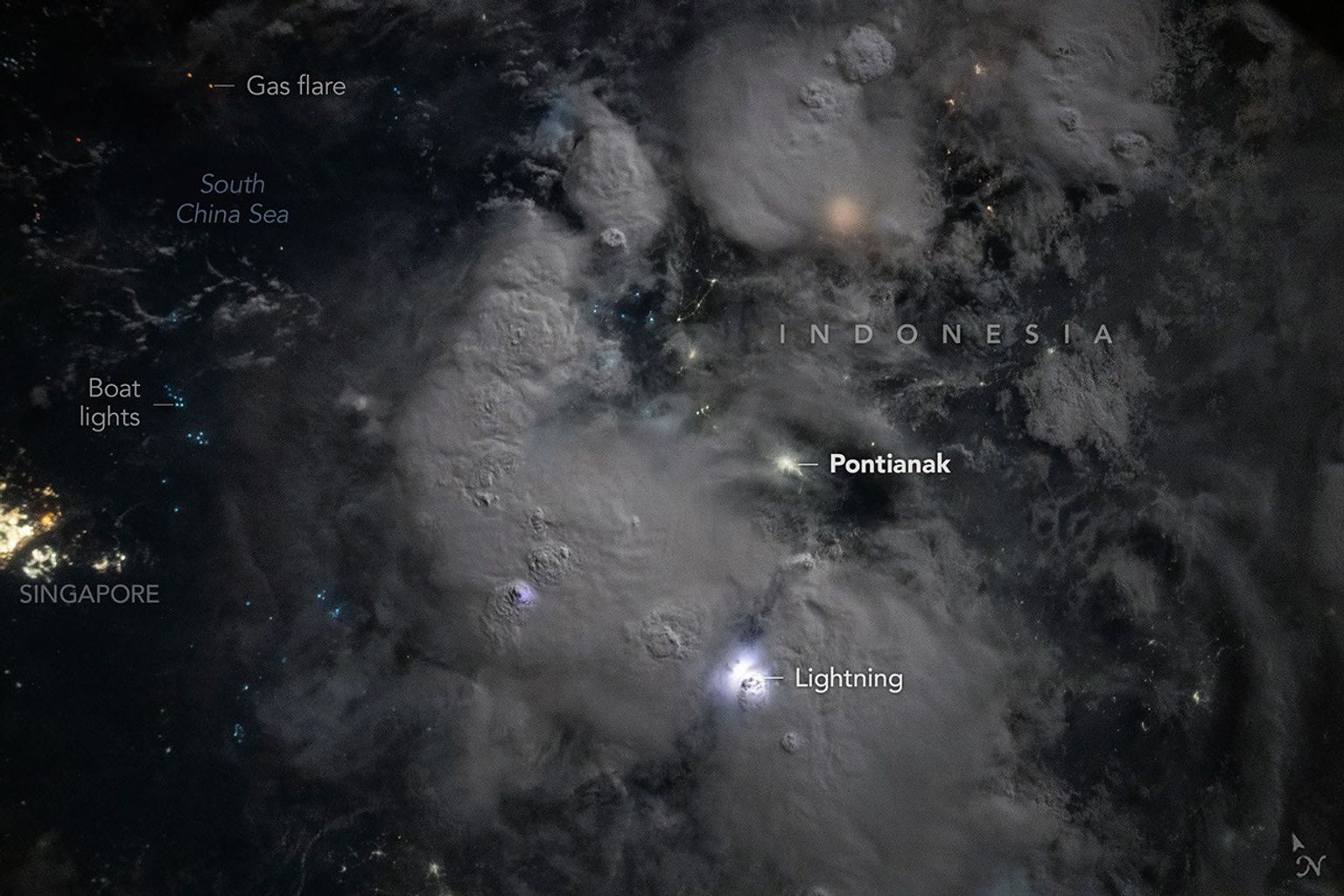
Alongside tropical lightning over West Kalimantan—with Pontianak visible on NASA's annotated frame—the photograph captures three distinct forms of human nighttime activity across maritime Southeast Asia. City lights from Singapore's 6.2 million residents glow on the left edge across the curving Singapore Strait from Indonesia's Batam and Bintan islands to the south.
What other lights appear beside lightning in the NASA frame?
West of Singapore, a tight cluster of bright blue points resembling the Pleiades star cluster likely marks fishing boats running intense deck lamps to attract squid, sardines, and anchovies. Farther offshore to the northwest, scattered orange specks are attributed by NASA analysts to gas flaring at offshore energy installations, illustrating how brightly coastal industry stands out from orbit after dark.

NASA scientists estimate roughly 2,000 active thunderstorms rumble across Earth at any moment, generating nearly 60 lightning flashes every second or about five million flashes daily. Writing in Air & Space essays cited by NASA, pioneering astronaut Sally Ride compared orbital lightning across vast storms to tossing fireworks from cloud to cloud, Donald Pettit likened night cities to Broadway marquees, and astronaut Anil Menon called space-viewed lightning fireflies in the night.
Why do orbital storm views matter for Indonesia's monsoon season?
For Indonesia and neighboring maritime corridors, the Expedition 75 frame underscores how rapidly convective storm cells build during the October-to-November inter-monsoon transition when light winds and humid seas fuel evening squalls. The orbital Earth observation milestone follows earlier AIGOS News science coverage of NASA's Voyager 1 probe crossing the one-light-day distance mark from Earth.