
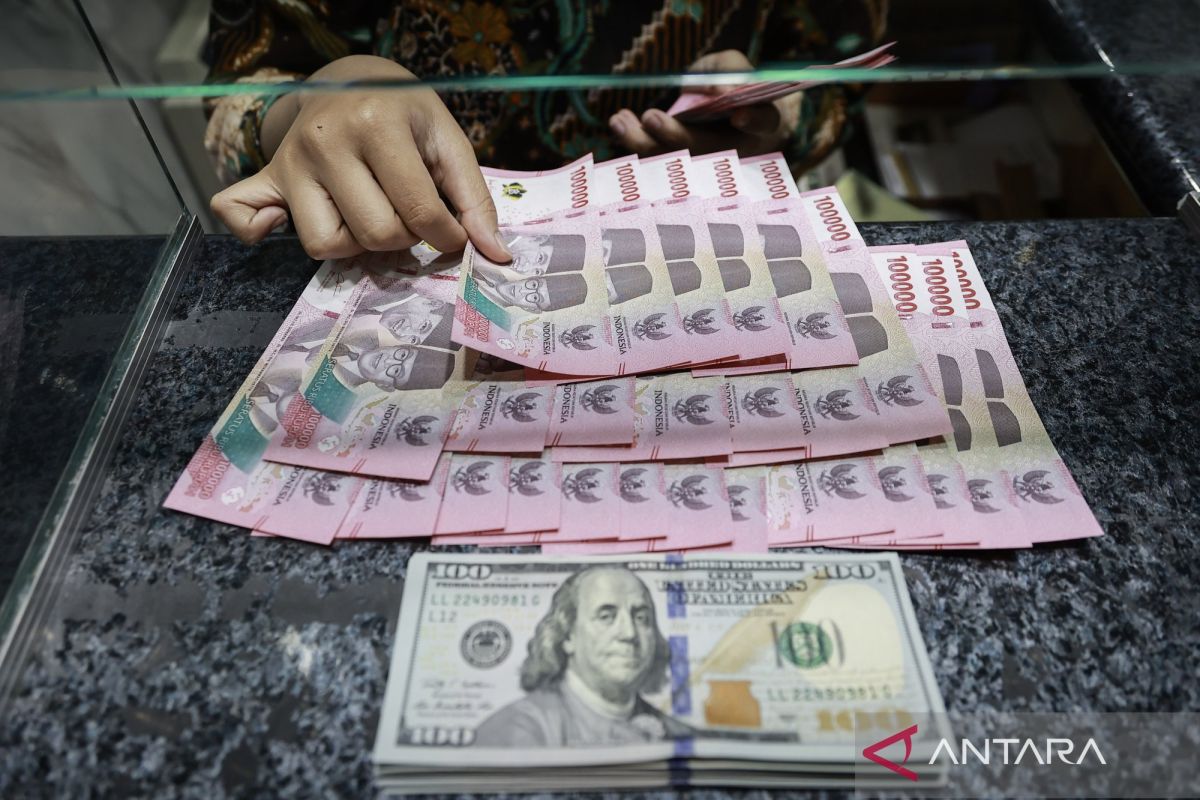
JAKARTAIndonesia's rupiah touched a record intraday low between Rp18,400 and Rp18,403 per US dollar on Thursday (26/11/2026) before paring losses late in the session. Antara reported a spot close down 32 points, or 0.17 percent, at Rp18,364 per dollar, while Refinitiv recorded a close of Rp18,335 after touching Rp18,390 at 13:19 WIB. Bank Indonesia (BI) Governor Destry Damayanti blamed the slide on Federal Reserve rate-hike expectations, MSCI index assessment concerns, and heavy domestic dollar demand.
What global and domestic pressures drove the rupiah lower?
Global pressure has centered on expectations that the Fed will tighten policy in December 2026 and into 2027 as US inflation stays at 3.8 percent, well above its 2 percent goal. Bank Woori Saudara analyst Rully Nova projected a 25-basis-point hike to a 4.25 percent upper bound, while domestic risk premiums widened—with five-year credit default swaps (CDS) rising to 107.9 basis points and 10-year SUN yields hitting 7.73 percent—amid concern over a fiscal deficit approaching 3 percent of GDP.
Speaking at parliament on Thursday, Destry noted that markets are also reacting to MSCI's latest assessment remarks alongside seasonal month-end corporate FX demand. Middle East escalation added risk aversion after UKMTO reported three vessels struck in the Strait of Hormuz, Iranian outlet Fars reported a tanker hitting a mine, and drone strikes targeted Saudi and Bahraini facilities.
How is Bank Indonesia responding to currency pressure?
Bank Indonesia is countering the sell-off with active FX market intervention and hedging incentives via Domestic Non-Deliverable Forward (DNDF) and Non-Deliverable Forward (NDF) instruments, which drew over US$1 billion in inflows in November 2026. Destry expressed confidence that currency volatility will ease as BI maintains steady intervention.
Money-market analyst Ibrahim Assuabi separately warned about a proposed US tariff of up to 18 percent on Indonesian exports, under consultation through 2027. If enacted, the duties could squeeze US demand for Indonesian textiles, footwear, and electronics and reduce export-dollar inflows.

How does a weaker rupiah affect Indonesian industry?
For Indonesian industry, the record-weak rupiah immediately raises imported raw-material costs, prompting Industry Minister Muhammad Sarmuji to study state-backed import-duty relief. At Cikarang Dry Port in Bekasi on Thursday, Sarmuji said the ministry may propose that the government absorb part of raw-material import tariffs to preserve factory competitiveness.
For Friday's session (27/11), Ibrahim sees the rupiah trading between Rp18,360 and Rp18,420 per dollar, while Rully projects a Rp18,290 to Rp18,400 band, urging fiscal discipline alongside BI action.