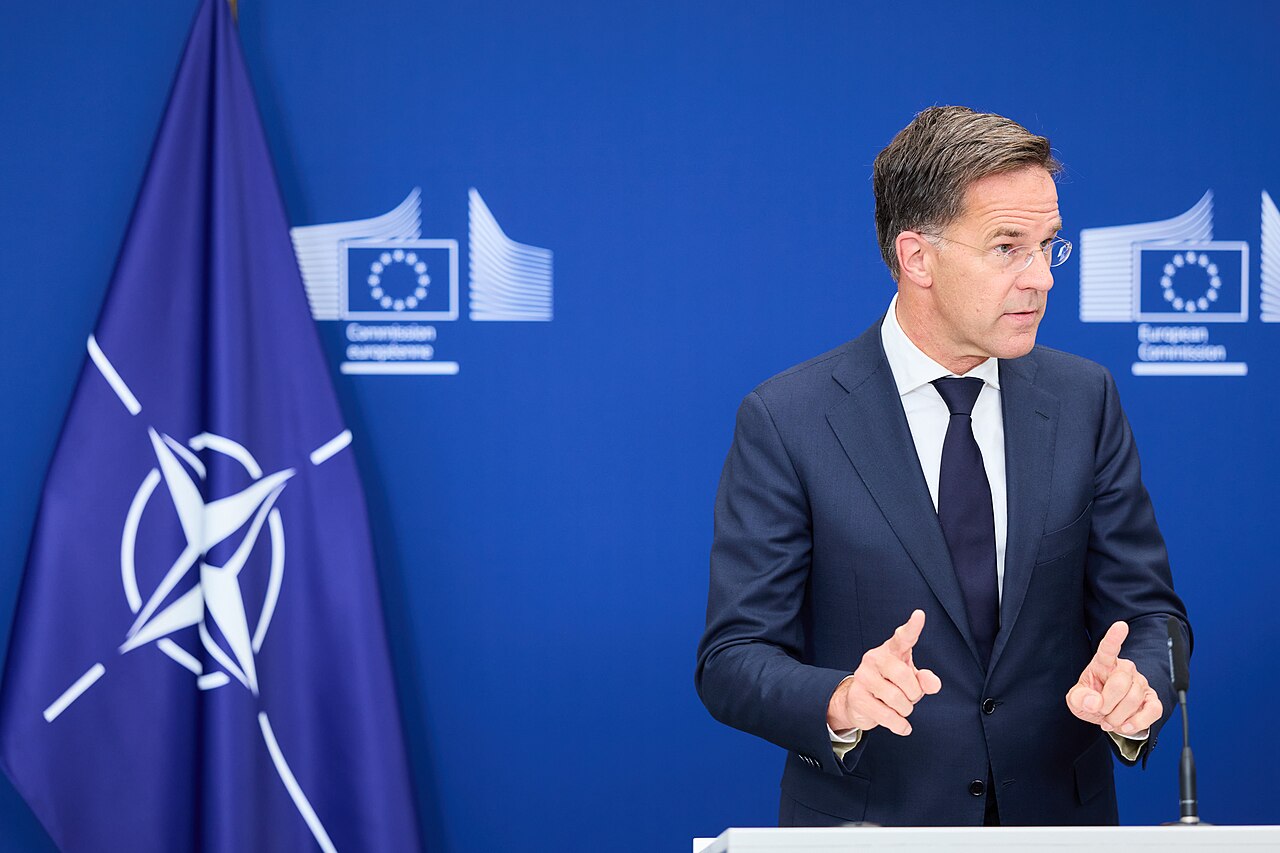
BERLINNATO Secretary General Mark Rutte declared in Berlin on Monday (23/11/2026) that the alliance's mutual defense pledge extends into space, responding to German intelligence reports warning Russia may launch a nuclear-armed satellite named Sputnik-S before year-end. Alongside German Chancellor Friedrich Merz, Rutte pledged NATO will protect every inch of allied territory including space, hours after Russian Security Council Deputy Chairman Dmitry Medvedev warned Moscow could be obliged to use nuclear weapons.
What nuclear thresholds did Dmitry Medvedev lay out?
Medvedev wrote that Russia has not yet seen a direct necessity to deploy nuclear weapons in Ukraine and said President Vladimir Putin weighs proportionality against actual harm. Still, he accused Kyiv and NATO of driving escalation and cited the 1996 International Court of Justice advisory opinion to argue international law permits nuclear use when survival is at stake, warning Western nuclear transfers or catastrophic non-nuclear strikes could trigger a preemptive strike.
The Guardian and Anadolu Agency reported that German outlets NDR, WDR, and Sueddeutsche Zeitung, citing Germany's BND intelligence agency, said Sputnik-S was assembled years ago near Moscow with November warnings pointing to a launch within 60 days. German Space Command chief Maj. Gen. Michael Traut has warned an orbital nuclear blast and electromagnetic pulse (EMP) could disable up to a third of low Earth orbit satellites, breaching the 1967 Outer Space Treaty and 1963 Partial Nuclear Test Ban Treaty.
How did Moscow respond as Germany pledged new Ukraine aid?
Russia's Embassy in Berlin rejected the claims as propaganda and insisted its space activities are peaceful, while Kremlin spokesman Dmitry Peskov questioned the anonymous sourcing. At the 72nd NATO Parliamentary Assembly in Berlin, German Foreign Minister Johann Wadephul reaffirmed €11.6 billion ($12.7 billion) in bilateral military aid and noted EU proposals for up to €45 billion ($49.4 billion) in 2027 Ukraine funding after three Russian Kh-101 missiles entered Polish airspace Friday.
Rutte confirmed NATO continuously evaluates deterrence across Europe, North America, the Arctic, and space while rejecting Moscow's demands to pull back alliance borders. Wadephul urged Putin to stop the war and enter meaningful negotiations with both Ukraine and European partners represented at the table.

Why orbital nuclear alerts and NATO friction matter to Indonesia
For Indonesia, orbital EMP threats carry acute risks across more than 17,000 islands relying on satellite links for banking, maritime navigation, aviation, and disaster alerts. Renewed European geopolitical risk also reinforces safe-haven US dollar demand—keeping the rupiah sensitive near Rp18,203 per dollar (JISDOR Rp18,223) on Monday—and sustains freight insurance risk premia on imported food and industrial supplies.