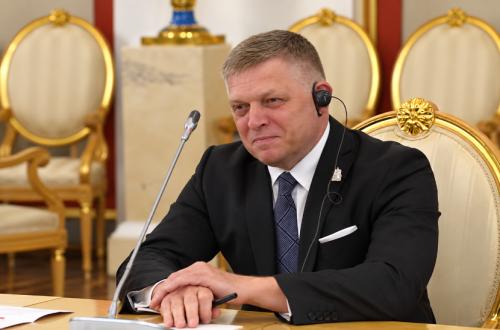
Slovak Prime Minister Robert Fico says his country will not help finance a proposed additional €45 billion European Union loan for Ukraine, arguing that the money risks prolonging the war with Russia and the suffering of Ukrainians.
In a video posted by Mirror on Sunday, November 22, 2026, Fico said Slovakia remained willing to provide humanitarian aid. He opposed participation in financing that he believes would sustain military operations. Bratislava had also declined to take part in an earlier €90 billion EU loan facility for Ukraine.
The rejection comes ahead of talks on the EU's long-term budget for 2028–2034. Fico accused European leaders of putting political pressure on countries that oppose additional funding by linking the Ukraine loan to approval of the bloc's shared budget.
Reuters reported on November 10 that German Chancellor Friedrich Merz had urged all EU members to share the cost of financing Ukraine as part of the budget discussions. In a letter to European Council President António Costa obtained by Reuters, Merz made a joint commitment to that financing a condition for continuing talks on matters with financial consequences. Slovakia had previously secured exemptions from certain financial obligations under an EU loan scheme for Ukraine.
The Financial Times reported on November 16 that Germany's threat to withhold budget approval had linked Ukraine's financing needs with the distribution of development funds among member states. The dispute could complicate negotiations because changes to the EU budget framework require support from every member.
Fico's criticism also comes as the United States renews efforts to seek a diplomatic settlement. Reuters reported that Russian and Ukrainian delegations held US-mediated talks in Abu Dhabi on November 10–11 and agreed to a large prisoner-of-war exchange, but made no significant breakthrough on territory or a settlement. Ukrainian President Volodymyr Zelensky hopes the next talks will produce concrete results before the end of 2026.